Showing posts with label Travel Routes. Show all posts

Friday, October 2, 2026

The Hidden Forest Check Dam: Rainwater Harvesting in Nadumalai

Located just 3.5 kilometres away from Valparai Town (roughly a 20-minute drive), the Nadumalai Estate Forest Route houses a brilliant example of ecological conservation: an advanced forest rainwater harvesting system. Tucked away deep within the jungle canopy, this hidden engineering marvel plays a vital role in protecting both the local wildlife and the surrounding human settlements.
How to Get There & Trail Navigation
Finding this hidden spot requires following an offbeat, lesser-known estate path:
  • The Starting Point: Head towards the route leading to the Pachamalai Estate. Keep driving until you reach the prominent Samathanapuram Bus Stop.
  • The Private Trail: Right before branching towards Pachamalai, you will see a quiet forest road branching off. Follow this private trail into the woods.
  • The Forest Hike: Travel along this scenic, canopy-covered path for about 2 kilometres to reach the rainwater harvesting zone nestled deep inside the heart of the forest.

Check dam inside forest valparai
Nadumalai forest
🌊 How Rainwater Harvesting Solves Human-Wildlife Conflict
During the blistering summer months, natural water streams on the mountain crests dry up completely. Historically, this forced wild animal herds to venture out of the jungles and enter local estate workers' colonies (Padi) in search of water, leading to dangerous encounters.
To solve this, specialized rainwater harvesting check dams were constructed deep inside the core jungle lines.
  • Perennial Water Supply: These structures trap massive amounts of water during the intense monsoon months, creating a permanent reservoir for wildlife right inside their natural habitat.
  • Keeping Villages Safe: Because water and lush vegetation remain highly available in the center of the forest even during peak summers, elephants, leopards, and bisons no longer feel the need to stray into town limits


Rain water harvesting valparai
Rain water Harvesting 


Trekking place valparai
Nadumalai Forest

Wild forest to encounter animals
Rainwater harvesting middle of the forest 


A Safe Haven for Mega-Fauna
This hidden watering hole is an active lifeline for a diverse array of Western Ghats wildlife. The reservoir serves as a critical drinking zone for:
• Asiatic Elephants and large herds of Indian Bisons (Gaur).
• Predators like the Bengal Tiger and Leopards.
• Wild Boars, Barking Deer, and Dholes (Asiatic Wild Dogs).

Welcome to Valparai: The Untouched Paradise of the Anamalai Hills

When most people think of a hill station in Tamil Nadu, famous destinations like Ooty or Kodaikanal instantly come to mind. But nestled high within the Coimbatore district lies a hidden gem that offers a far more peaceful, raw, and pristine mountain experience: Valparai.
Originally known as Poonachimalai before Indian independence, Valparai is a breathtaking paradise spread across 56 sprawling tea and coffee estates. Because it remains largely unexplored by mass commercial tourism, its secret viewpoints, misty trails, and deep rainforest patches feel entirely untouched and magical.


Pepper cultivation in valparai
Pepper cultivation 


 A Land Defined by Endless Tea Plantations
Everywhere you look in Valparai, you are greeted by rolling waves of emerald-green tea estates. But the experience here goes far beyond just sightseeing:
  • Fresh From the Source: You can buy original, unblended tea leaves directly from the factory outlets where they are harvested and manufactured. For the ultimate local experience, stop by the small estate shops—like the famous tea stalls in Nadumalai Estate—located right outside the factory gates to sip a hot cup of fresh tea.
  • Global Reputation: The tea and coffee grown in these high-altitude hills are of such premium quality that they are packaged by top global brands and exported across the world via the Kochi International Harbour.

Pepper grown in valparai
Pepper Cultivation 

Pure Mountain Spices & Souvenirs
Thanks to its unique, moisture-rich climatic conditions, Valparai is a fertile haven for premium spice cultivation. Before you head back down the hairpin bends, make sure to visit the local town shops to stock up on:
  • Black Pepper: Grown organically along the trunks of shade trees cutting through the tea fields.
  • Cardamom (Elachi): Highly aromatic and freshly harvested from the nearby valley plantations.
  • Homemade Chocolates: Rich, locally crafted treats that make the perfect gift for family back home.


Tea estate lower view
TEA Plantations 

A Sanctuary for Rare Wildlife
What truly sets Valparai apart from other hill stations is how closely humans and nature live together. As you explore the estate roads, you have a high chance of spotting endangered and majestic wild species in their natural habitat, from the proud Nilgiri Tahr on the rocky cliffs to majestic bisons, elephants, and lion-tailed macaques resting near the plantation borders

Tea shop near nadumalai old factory
TEA shop in Nadumalai estate 


Eco-Traveler Note: Valparai's wildlife relies on us keeping their home clean. Please join our mission to protect this heaven—do not litter or pollute these pristine hills with plastics.


Thursday, October 1, 2026

The Niagara of India: A Complete Guide to Athirapally Water Falls from Valparai

Dropping from a magnificent height of 53 metres (80 feet) along the Chalakudy River, Athirapally Water Falls is Kerala’s largest and most iconic waterfall. Nestled in the heart of the dense Western Ghats rainforest, a trip here rewards you with thunderous cascades, misty spray, and pristine forest air. [1]
The Epic Valparai to Athirapally Forest Drive
The road journey connecting Valparai to Athirapally is widely celebrated as one of the most thrilling and adventurous forest drives in South India.
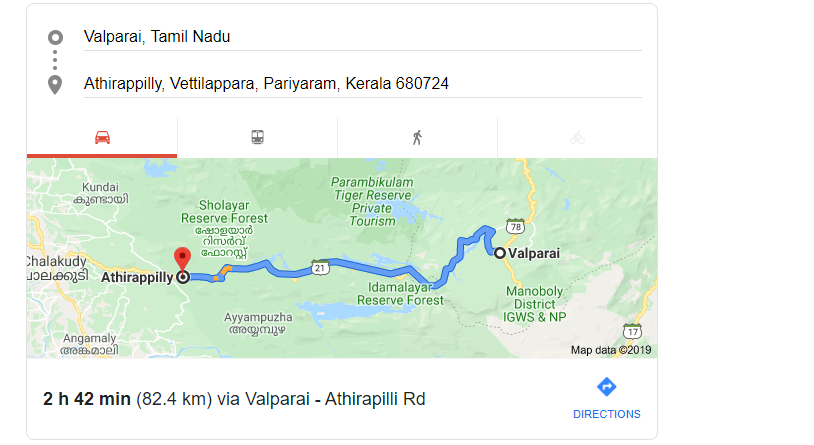
  • Distance: Athirapally Falls is located 74 kilometres away from Valparai town.
  • The Route: The road takes you past the scenic Sholayar Dam before entering a vast, unbroken stretch of dense jungle managed by the forest department. 
  • Travel Time: Expect the trip to take anywhere between 3 to 4 hours. While the physical distance seems short, the narrow winding roads, speed limits, and potential wildlife roadblocks mean you must drive slowly and safely. 
  • Reaching Chalakudy: If you continue past the falls, the town of Chalakudy is roughly 138 kilometres from Valparai. It serves as your primary gateway into mainland Kerala.

athirapally to valparai
valparai to Athirapallhy

⚠️ Strict Forest Checkpost Rules & Timings (Must Read!)
The forest stretch between the Malakkappara checkpost (Tamil Nadu/Kerala border) and the Vazhachal checkpost (Kerala) is heavily guarded to prevent human-wildlife conflict and protect nocturnal animals. 
  1. Strict Day-Only Operating Hours: The checkposts are strictly open from 6:00 AM to 6:00 PM for four-wheelers. Two-wheelers face tighter restrictions and are typically only allowed to enter between 6:00 AM and 4:00 PM.
  2. The Transit Time Limit: When you enter either checkpost, forest guards log your vehicle details, passenger count, and time of entry. You are given a strict window—usually 2 to 2.5 hours—to cross the 45-kilometre forest section. Lingering, stopping unnecessarily, or getting out of your vehicle is strictly illegal and will lead to heavy fines. 
  3. No Night Travel: No vehicles are allowed past the gates after 6:00 PM under any circumstances. Ensure you start your return journey early enough to cross the checkpost before the evening lockdown.
  4. Zero Plastic Check: Officials inspect vehicles for single-use plastics at the gates. You must declare any plastic water bottles you carry.


Athirapalli falls from road view
Athirapally falls long shot

Extreme Wildlife Alert

This dense rainforest stretch is a major elephant corridor and is teeming with large megafauna. It is incredibly common to encounter wild Asiatic elephants, Indian Bisons (Gaur), and families of lion-tailed macaques crossing the asphalt road. If you see animals on the road, stop at a safe distance, keep your engine quiet, and never honk or flash your lights.

Where to Stay & Best Time to Visit

• When to go: The waterfall looks most dramatic during and immediately after the monsoon season (June to October), when it flows at peak capacity.

• Accommodation: If you want to take your time exploring, there are beautiful luxury and budget jungle resorts located right near the waterfall entrance, allowing you to wake up to the sound of roaring water.

Eco-Traveler Note: This pristine rainforest is home to all four South Indian hornbill species and rare aquatic life. Please protect this biodiversity hot-spot—never litter or pollute the forest roads or rivers.


The Majestic Akkamalai Grass Hills, Valparai: A Trekker's Ultimate Frontier


Part of the protected Anamalai Tiger Reserve (formerly the Indira Gandhi Wildlife Sanctuary), the Akkamalai Grass Hills is a high-altitude marvel in the Western Ghats. Standing at an altitude of nearly 2,400 meters above sea level, this stunning eco-zone features unique "Shola-grassland" ecosystems, resembling the rolling green landscapes of Switzerland
Akkamalai grass hills to Valparai map
Valparai to Akkamalai grass hills 

How to Get to Akkamalai Estate
  • Distance & Travel Time: The hills sit roughly 16 kilometres away from Valparai town, taking about 41 minutes by road.
  • Public Transport: For budget travelers, local buses leave every 30 minutes from the Valparai Old Bus Stand (Palaya Bus Stand) heading straight toward the Akkamalai route. [
  • The Route: The motorable road takes you through the beautiful Akkamalai Tea Estate (managed by Peria Karamalai Tea Produce Limited). The path technically begins right from the backside of the Akkamalai Tea Factory.

Grass Hills panaroma view
Akkamalai grass hills 

⚠️ The Strict Forest Permit Process (Must Read!)
Because the Grass Hills are a highly restricted core tiger habitat, casual tourists are generally not permitted to enter the core grasslands without prior authorization. 
  1. Where to get Permits: You cannot get spot permissions at the estate. You must apply well in advance through the Forest Department division headquarters—either at the Anamalai Tiger Reserve Office in Pollachi or via the official state tourism portal, trek Tamilnadu
  2. The "Self-Responsibility" Sign-In: At the forest entry checkpost, a stark local warning slogan reminds trekkers of the harsh, wild terrain. The forest department requires all approved hikers to sign a mandatory declaration, acknowledging that they are entering this wild predator zone entirely at their own risk.
  3. Transport Rules: Private two-wheelers are strictly banned past the checkpost due to heavy animal presence. If permitted, you must hire a covered 4x4 Jeep/Tata Sumo from Valparai, and an official forest ranger must accompany your group.


Akkamalai grass hills view


Unique Wildlife & The Shola Landscape
The Akkamalai Grass Hills are a vital sanctuary for endemic and endangered species. The tough, resilient grass found here is native to the region, traditionally used by the indigenous Toda tribals to thatch their unique houses. 
  • The Abode of the Nilgiri Tahr: This is a primary native habitat for the endangered Nilgiri Tahr (Tamil Nadu's state animal).
  • Mega Fauna: Visitors frequently spot wild Indian Bisons (Gaur), elephant herds, and Nilgiri Langurs. The dense forest boundaries also serve as home ground for big cats, including leopards and Bengal tigers.
  • Bird Life: The area is a hotspot for birdwatchers, especially for spotting majestic Hornbills.
Grass hills in rainy season
Akkamalai grass hills 
Hidden Highlights Inside the Grass Hills
For those lucky enough to secure a trekking permit, the landscape reveals two fascinating, natural phenomena:
  • The "Shape-Shifting" Forests: Deep inside the valleys, the surrounding Shola forest patches have naturally grown into perfectly defined Mango and Apple shapes when viewed from the mountain crests.
  • Konal Arru (The Zig-Zag River): A beautiful, completely natural freshwater stream snakes its way across the meadows in a dramatic zig-zag pattern near the historic Konalar forest hut. 

Grass hills from mountain view

Grass hills Valparai

Grass hills
Akkamalai grass hills 

Best Time to Visit & Safety Advisories
  • Best Season: The ideal window is from October to January when the grasslands are pristine and green.
  • Avoid Monsoons (June to September): The rainy season makes the trails muddy, slick, and incredibly dangerous. Furthermore, the grass grows past head-high, making it impossible to spot hidden predators like leopards or tigers.
  • The Leech Hazard: During wet months, the terrain crawls with blood-sucking leeches. If you visit, travel in a group and wear thick protective footwear. 
Responsible Tourism: The Ultimate Eco-Travel Guide for Valparai
Valparai is not just a typical holiday destination; it is a highly sensitive ecological hotspot nestled within the Western Ghats. Home to endangered species like the Nilgiri Tahr, the Lion-tailed Macaque, and sprawling elephant corridors, these hills require a special kind of traveler.
To ensure that the beauty of Valparai remains pristine for generations to come, we ask all visitors to strictly follow our Valparai Eco-Rules:
🚫 1. Strict Plastic and Litter Ban
  • Zero Plastic Footprint: The tea estates and forest boundaries are strictly non-litter zones. Plastic bottles, snack wrappers, and aluminum foil discarded by tourists are frequently consumed by wild animals, leading to fatal consequences.
  • Pack It Out: Always carry a dedicated trash bag inside your vehicle. Whatever waste you generate during your trips to viewpoints like Nallamudi Pooncholai or Irachi Parai, bring it back to your hotel or Valparai town to dispose of it properly.
🐘 2. Respect the Wildlife Corridors
  • Give Animals the Right of Way: Valparai is a shared landscape where humans and wildlife live side-by-side. If you spot wild elephants or Indian Bisons (Gaur) crossing the roads near estate patches like the Mudis region, pull over safely, turn off your headlights, and let them pass peacefully.
  • No Honking or Flashing Lights: Loud horns and bright high-beams stress wild animals out, which can prompt them to attack vehicles out of fear.
  • Never Feed Wildlife: Feeding monkeys, birds, or langurs disrupts their natural diet and teaches them dangerous scavenging habits.
🚯 3. Protect Our Water Sources
  • Keep Streams Clean: Pristine freshwater rivers like the Nadumalai River supply drinking water to local communities and downstream wildlife.
  • Say No to Toxins: Do not use soaps, shampoos, or chemical detergents if you are dipping your feet or washing up near natural streams.
🥾 4. Support the Local Community
  • Respect Estate Workers: The beautiful tea gardens you photograph are the private workplaces of thousands of hard-working estate residents. Always be polite, ask for permission before entering deep tea rows, and follow their local safety warnings.
  • Hire Local Guides: When planning treks like the Akkamalai Grass Hills, always hire authorized local guides and jeeps. This supports the local economy directly and ensures your trek remains perfectly safe.